Keeping the lights on: why the wires matter as much as the megawatts
Zambia has set itself two deadlines that fall in the same year: 10,000 megawatts of installed generation capacity, and electricity for every household, both by 2030. Neither is a generation problem alone. Every megawatt built has to be stepped up, carried, stepped down and handed over before it counts as supply — and that work belongs to transmission and distribution. In this article, we look at why the network has become the binding constraint on resilient power supply, and how the new market structure is opening that work to private capital.
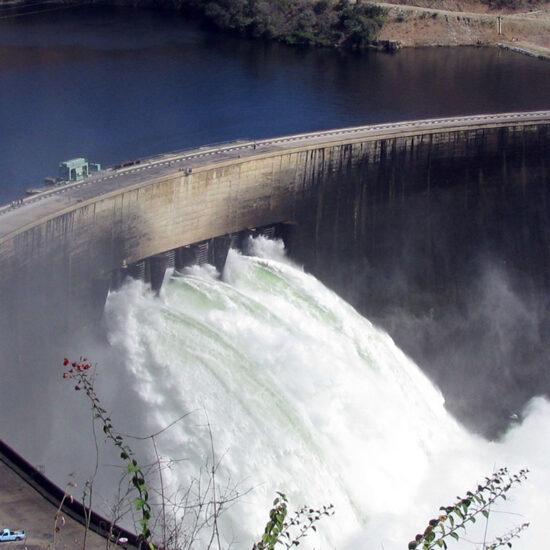
Zambia has in less than two years added generation at pace. Latest Ministry of Energy figures put installed capacity at 4,576MW, up from about 3,100MW in 2021, with solar rising from 88MW to roughly 841MW over the same period.
But installed capacity and delivered supply are not the same thing. Power that cannot be moved from where it is produced to where it is needed, at the voltage the consumer can use, is not supply. It is stranded capacity — which is why transmission and distribution is a core to supply resilience.
Opening the Continental Energy and Infrastructure Investment Forum in Lusaka in February 2026, President Hakainde Hichilema restated the target of lifting generation capacity to 10,000MW by 2030. Running alongside it is universal electricity access by 2030, set out in Zambia’s National Energy Compact under Mission 300, which puts the investment requirement at US $11.9 billion — US$9.5 billion of it expected from the private sector. Progress has been real: more than 300,000 connections since 2022 have taken national access from 34 to 56 per cent, and rural access from 8 to 34 per cent.
Both targets converge on the same asset class. A 10,000MW fleet is a transmission programme as much as a generation one, because capacity that cannot be evacuated to load will not be financed. And universal access is almost entirely a distribution undertaking — lines, service transformers, reticulation, metering and step-down substations. No connection has ever been made at a power station.
A grid built for a different power system
Zambia’s network was originally designed for a few very large hydropower stations in the south feeding two load centres along the line of rail. It moved power in one direction, and did that well for decades. The system now being built looks different: solar plants are dispersed rather than concentrated, open access has invited many sellers and buyers onto the same lines, and cross-border trade means power may need to flow north one month and south the next.
Resilience is not another word for surplus capacity, but the ability to substitute one source for another when a reservoir falls or a corridor is lost, without shedding load. Replacing drought-hit hydro with imports, or with a solar plant 400 kilometres away, is a transmission and distribution function — it needs the interconnections, switching capability, voltage support and system control to make the swap. Diversifying the generation mix without that flexibility simply relocates the vulnerability.
The asset that does the work
The substation is where most of the network’s useful work is performed, combining transformers, switchgear and control systems to deliver:
• Voltage transformation — up for efficient long-distance transmission, down to safe, usable levels for consumption.
• Switching and control — connecting, disconnecting and re-routing sections of the network, the mechanism by which the system absorbs a fault instead of collapsing around it.
• Integration of generation — every new IPP or embedded solar plant reaches the grid through a connection substation.
• Loss reduction, protection and voltage regulation — holding the system within safe and stable limits as demand rises and falls.
The Electricity (Open Access) Regulations, enacted on 19 July 2024 under the Electricity Act of 2019, enables third parties to access the transmission and distribution network irrespective of ownership, with eligible consumers buying directly from producers and traders and paying a wheeling fee for use of the system. Crucially, private capital can now earn a return on transmission and distribution lines, not only on generation.
Several players are already building. CEC has long operated its own high-voltage network in the Copperbelt; North-Western Energy Corporation runs distribution infrastructure of its own; and Zengamina Power Limited in Ikelenge remains the reference case for a privately-owned, regulated mini-grid electric utility. Lusitu Transmission and Distribution Company, an affiliate of licensed cross-border trader Kanona Power Company under the Exergy Energy group, is mandated to build, own and operate transmission and distribution infrastructure in Zambia and the wider region.
It is developing a privately funded high-voltage interconnector, in the order of US $100 million, linking Mwakibete in southern Tanzania with Nakonde — an import route into a part of the country the line of rail never served. The company also has a healthy pipeline of several in-country substations to supply mining loads.
Open Access is a framework, rather than a finished market, and the outstanding issues are all network items: a transparent wheeling and transmission pricing methodology, and a system operator function still performed by ZESCO, which leaves the utility as both dominant participant and referee.
Mining and industry will underwrite the wires
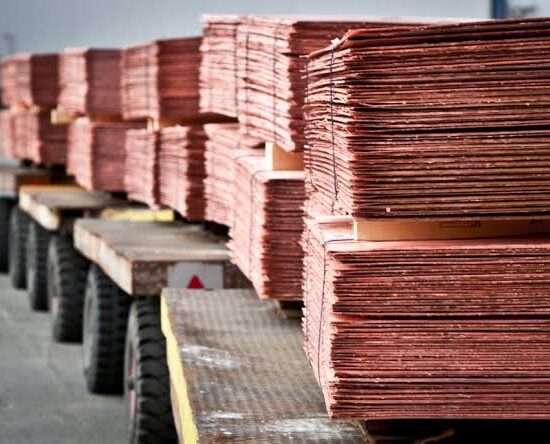
The demand case is not speculative. Zambia has attracted roughly US $12 billion in mining investment since 2021, with the Government targeting three million tonnes of copper a year by 2031. Growth on that scale, plus unsatisfied demand in regional markets, such as the DRC, produces what network investment needs: large, creditworthy, long-dated anchor loads.
Generation targets are announced in megawatts. Access is delivered in transformers, switchgear and service lines. The substation is the point at which a policy target stops being a number and starts being a light that comes on for consumers to experience and appreciate.