CONSOLIDATING ZAMBIA’S HYDRO POWER FOOTPRINT
Zambia’s energy security will only be consolidated with increased power generation capacity derived from a combination of a combination of sources. So far, hydropower and solar energy, are the two leading renewable sources of energy. Hydropower, which hovers in the 80th percentile of the country’s total installed capacity, remains the backbone of the national system and will likely remain so in the decades ahead. But as climate-induced droughts increasingly occur, the private and public sectors have both collectively taken decisive steps to rapidly roll-out solar power generation projects around the country, intensifying pace since 2024. Still, hydropower remains a strategic investment in pursuit of the country’s 10GW installed generation capacity target by 2030…..tap the link to readmore https://zambianbusinesstimes.com/zambias-changing-power-sector-transmission-distribution/
In last week’s edition, we observed how the 180MW Ngonye Falls Hydroelectric Project, the first major hydropower generation asset in Western Province, will prove to be an essential part of Zambia’s energy diversification agenda, being so strategically located to Angola on Zambia’s western frontier. This week, we explore how the 244MW Kalungwishi hydropower project in Luapula and Northern provinces will help to sustain the country’s power supply through geographic diversification, and why the outlook is far more optimistic now than prior ventures to develop the asset.
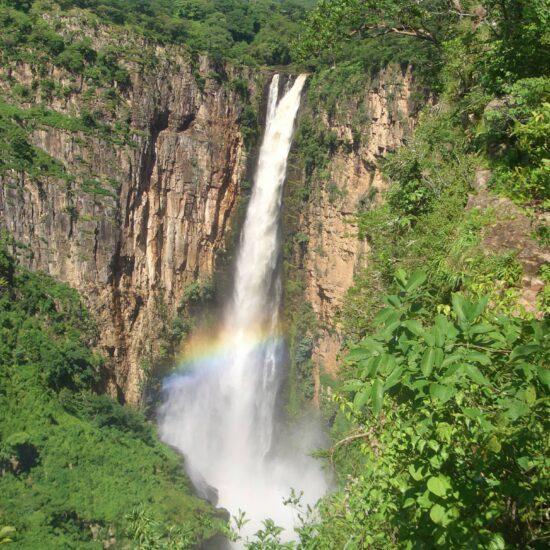
Kalungwishi: A brief history The northern circuit of Luapula and Northern provinces is blessed with abundant waterfalls, rivers and lakes, which have remained untapped for hydropower. In 2001, the Kalungwishi River was identified as having significantly important hydropower potential and acknowledged as a prospective and strategic renewable energy source. Subsequently, the government begun planning for power generation at two waterfall sites, being Kabwelume Falls and Kundabwika Falls. The former, has a projected capacity of 93MW, while the latter is 151MW, bringing the total potential installed capacity to 244MW.
The project to develop the two sites has attracted different suitors over the years, but for one reason or another, development did not proceed. Now, things are different. Lunzua Power Company, owned by the Zambian integrated end-toend power solutions investor, Exergy Energy, is moving from paper to putting metal in the ground. The status The relevant environmental processes have been undertaken and decisions granted, including the Environment and Social Impact Assessment and the all-important decision letter from the Zambia Environmental Management Agency (ZEMA).
Projects such as these are huge undertakings, magnifying the importance of consultation and social collaboration. In recent months, Lunzua has held concerted stakeholder engagements, especially with all the traditional leaders and community representatives in the project’s catchment area. The outcome has been unanimous support for the project and making clear the communities’ expectations. From a technical preparedness perspective, ZESCO Limited Senior Manager, Mr.
Kelvin Kamwale, explained during a recent tour to the area that substantial preparatory work had already been completed, including feasibility studies, hydrological assessments, and technical evaluations, providing a solid foundation for the implementation phase. Once operational, the Kalungwishi Hydropower Project is expected to significantly enhance national electricity supply, strengthen energy security, and position Luapula and Northern Provinces as attractive destinations for industrial investment.
It is expected that as financial close is achieved, site clearance and commencement of construction will follow. Beyond generation While much of the focus is on the generation projects, a generation asset without the supporting transmission infrastructure is of no use, as we have shown in past issues. Infrastructure is a catalyst for positive social and economic change, not only for the opportunities created for physical labour, but also the need for services, including micro businesses like selling food to workers around the construction site. More pointedly, the project is expected to improve electricity supply reliability in Northern and Luapula provinces, which will spur the two provinces’ suppressed economic potential. Luapula is particularly known for its fishing, but is equally rich in minerals and agriculture. Power has long been a constraint to industrialise this potential at scale.
Lunzua’s Head of Hydropower and Thermal, Yanda Hamilemba, has reaffirmed the company’s commitment that beyond supplying power to the national grid, the project would prioritise local employment, skills transfer, and community-driven economic development. “Our objective is to deliver a project that meets international, technical, environmental, and social standards, while ensuring that communities around the project directly benefit from its presence,” he said.
While supporting the area’s industrial, mining, agricultural, and regional economic development and strengthening the national grid, the project will also provide opportunities for electricity exports through the Southern African Power Pool (SAPP). What comes next For Zambia’s installed power generation capacity to continue growing and supporting the economic industrialisation agenda, investing in hydropower projects in areas with abundant water bodies is critical to balance out the negative effects of climate variability, which has now become a certainty, and enable the country to continue running at optimum energy levels despite the climatic conditions at any one point. Private capital has emerged as essential in achieving these objectives. Sustaining fresh investments in the country’s energy sector will make all the difference in improving and permanently changing Zambia’s energy landscape.
Sponsored Article