According to official government statistics, Muchinga Province is expected to record the highest maize yield by province, with the harvest estimate of approximately 3.3 tonnes per hectare for the 2025/2026 farming season, raising expectations of significantly higher crop production.
The 3.3 tonnes per hectare recorded in the two provinces is the highest, while the lowest was recorded in Western province, 0.9 tonnes per hectare for the same 2025/2026 farming season. Chinsali District Agriculture Coordinator Frank Sindazi, has attributed the expected yields due to the adoption of smart agriculture practices, timely input delivery, and improved government support policies as major factors behind the positive farming season in the district.
Speaking in an interview with Zambian Business Times-ZBT Sindazi said the country’s anticipated bumper harvest has largely been influenced by intensified extension services provided to farmers, alongside the timely distribution of agricultural inputs. “Proactive government interventions have played a significant role in encouraging farmers to actively participate in production activities, ultimately contributing to improved output levels and one of the key factors is the intensive extension delivery that we mounted.
At the same time, agricultural inputs were delivered on time, and government policies have been very encouraging, allowing farmers to fully participate in production activities,” he said.
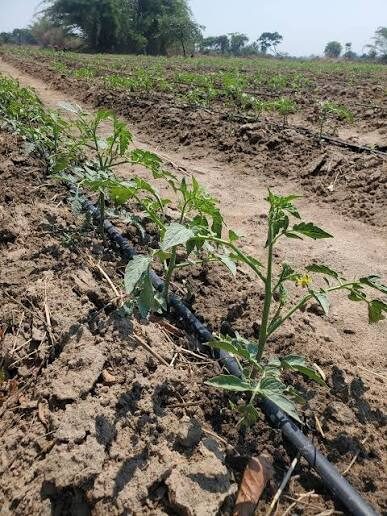
He noted that contrary to common perception, having larger farming land does not automatically guarantee higher agricultural production as in many cases, farmers often overestimate the actual size of cultivated land due to poor spacing methods and ineffective field management practices, resulting in lower productivity despite having larger hectarage.
“It is not necessarily about the total land size. A farmer may claim to have two hectares, but in actual practice it may not effectively be two hectares because spacing between ridges, planting techniques, and crop management all play a critical role in determining yields,” he explained.
However, Sindazi farmers are encouraged to adopt modern farming techniques such as timely planting, proper crop spacing, effective field management, and the use of early maturing seed varieties to improve production efficiency.
“Climate change has become an important factor which farmers can no longer ignore, making it necessary to adapt farming methods to changing weather conditions,” said Sindazi. Sindazi added that the extension methodologies currently being implemented by government agricultural officers are helping farmers understand that productivity is no longer determined by land size alone, but by how effectively available land is managed.
Article Francine Chibuye