Zambia Sugar PLC Country Managing Director Oswald Magwenzi noted that 2026 has been more challenging compared to the previous year as the company in the half-year of 2026 endured various challenges, including the decrease in domestic sales despite attaining some positive results.
A check by Zambian Business Times in Zambia Sugar’s halfyear financials revealed that in the six months to 28th February 2026, total revenue declined by 10% to K3.56 billion, compared to K3.97 billion in the prior comparative period. The decrease was primarily driven by lower domestic sales volumes, which had an adverse impact of K451 million and was partially offset by improved revenue realization across both domestic and export markets, contributing a positive K66 million.
A further check in the financial results also indicated that the company’s domestic sales revenue fell by 10%, reflecting a 20% reduction in volumes relative to the previous corresponding period.
While export revenues benefited from a 24% increase in sales volumes, which was outweighed by a 25% adverse movement in price realization, resulting in a 6% net decline in overall export sales revenue.
Speaking during the 2026 halfyear financial and operational results presentation attended by the Zambian Business Times, Magwenzi noted that the company in the first half of 2026 received adequate rainfall, which is an advantage in the growth of cane and eventually leads to high yields.
“We received one of the best rainfall seasons in a very long time, which will work well for the growth of the cane crop, eventually resulting in increased yields and simply showing that we spent less on irrigation, giving an advantage also for the country’s energy sector to recover because about 80% of the country’s power comes from hydro,” said Oswald.
He added that investments have been made in various aspects of the company’s operation, ranging from improved irrigation systems and factory investment to help increase efficiency and aim to generate more power and enhance consumers’ routes.
“The company has not been spared when it comes to the geopolitical tension that is happening, but the company has focused on things that can be controlled to strike a balance, because business is about positioning yourselves and being able to neutralize risks such as the current political tension, which has resulted in increased international and domestic fuel prices, and being able to take advantage of some of the opportunities,” said Oswald.
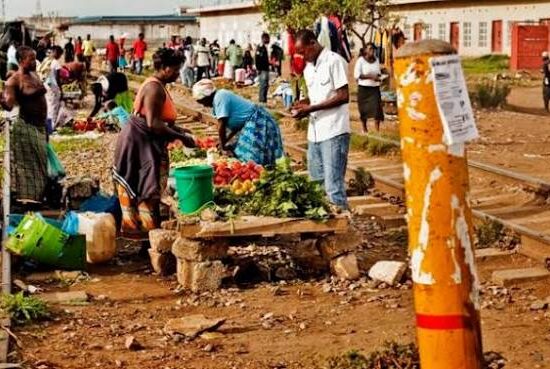
However, on the negative side, Oswald mentioned that the company has seen a significant drop in domestic demand for sugar, which could not really be as a result of reduced consumer demand but rather maybe due to reduced sales attributed to the illegal importation of sugar.
“There is a lot of illegal importation of sugar that is coming into the country, and as a result it is being reflected through the slowing down of the company’s sales,” said Oswald. He added that the company has also endured the impact of the improved inflation rate, which currently stands at 6.6%, as the company has grown in 12 months from a time when inflation was very high and the company incurred costs. “
If you are in the sugar industry, cane is grown in over 12 months, and what happened was we had grown the crop at a time when inflation was very high and the cost sunk in the crop, and now that inflation has gone down, we cannot increase the price despite incurring the cost,” said Oswald.
Article by Tyndale Muchiya