10-megawatt Mwandi joint venture to feed clean power into the national grid and create around 100 construction jobs
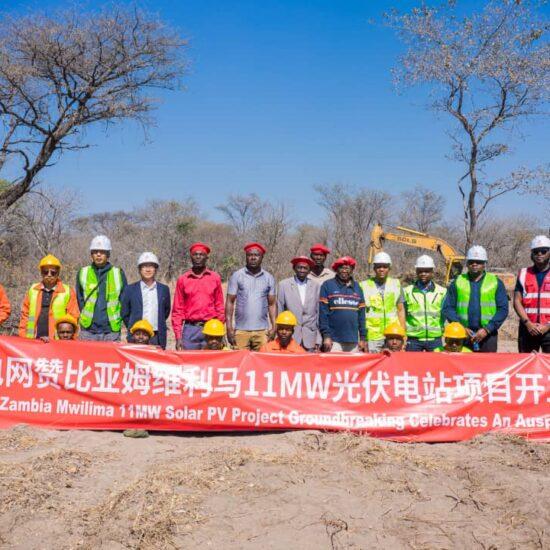
CONSTRUCTION of a 10MW Solar PV Plant in Mwandi District, set to change the area’s energy and industrial landscape, has begun amidst strong support by traditional leaders through the Barotse Royal Establishment (BRE).
The 10MW solar photovoltaic (PV) plant, which officially broke ground on August 22, 2026, being developed by Lunzua Power Company and Valinor Investments, is an US $8 million investment that further pushes Lunzua’s strategy to expand its portfolio of clean, renewable power generation across Zambia and the wider Southern African market, and further consolidates its position as a long-term partner in the country’s energy transition.
The project is also the first phase of the 20MW Mwandi Solar Plant, and is a mid-scale generation asset seated in Western Province.
Under construction in the Mwilima Area of Mwandi District, the plant will support Western Province’s inroads into becoming a hub of industrial and economic activity, unlocking opportunities in agriculture, livestock, fish farming and value addition, while improving livelihoods.
Since Zambia’s independence, the province has lacked a reliable and sustainable source of power capable of supporting Mwandi District’s estimated 40,000 residents.
A lack of a consistent and reliable power supply has constrained growth in aquaculture, livestock farming, and value addition, which rank among the area’s key economic sectors.
A recent site visit by a combined team of Lunzua and Valinor officials confirmed the BRE’s support. Welcoming the development, the leaders say the project will positively impact the local community through jobs and enhanced energy security for households and businesses.
In a show of solidarity, Mr. Crispin Mowa Zambwe, the Leashimba, the head of the Mwandi BRE Kuta, expressed the royal’s full support, describing the solar project as a timely intervention that will elevate living standards, create employment, and stimulate sustainable development within their chiefdoms.
“Where we are at the moment, it shows that we are serious and things are getting on. We are looking forward to the completion. It will benefit us, the local community, in terms of employment for our children. We promise to cooperate with the people working on the project,” the Leashimba, flanked by other indunas, said during his interaction with the Lunzua and Valinor management teams at the groundbreaking ceremony.
Joel Mwale, Lunzua’s Head of Renewable Energy, emphasised that local residents would be prioritised for job creation.
“One of the things we have emphasised to SANY International (Zambia) is that we want the people within this area to benefit from the employment that is being generated from this project. We will need up to 100 people for bush clearing and civil works, among various other tasks during construction. We also believe that other local stakeholders will benefit from indirect job creation in food preparation and in the hospitality industry, among others,” Eng. Mwale said.
Valinor, a subsidiary of Lusaka-based Thebe Investment Management Group, is the other party in this joint venture.
Thebe’s Managing Partner, Mumamba Mwansa, who is also COO–Projects at Valinor is delighted with the latest asset being developed.
“Under Valinor, we invest in rural projects so that citizens can extract and enjoy the value of what their areas have to offer. Our feasibility studies showed how Mwandi could benefit from solar energy, and we are delighted to have partnered with Lunzua to make it happen. We are grateful to Senior Chief Anang’anga Imwiko, the Barotse Royal Establishment, the traditional leadership and local stakeholders for warmly welcoming our teams, and we look forward to working with SANY International (Zambia) through to completion,” Mr. Mwansa said during a site visit.
The project’s total cost of US$8 million includes an evacuation line connecting the plant to the ZESCO grid and will be financed on a 30:70 equity-to-debt basis by Lunzua and Valinor.
SANY International (Zambia) Industrial Company Limited is the appointed contractor, and roughly 40 hectares have been reserved for the project, expected reach completion before the end of the first quarter of 2027.
Once complete, the plant will have an installed capacity of 11 megawatt-peak (MWp) or 10 megawatt-alternating current (MWac) and generate approximately 22 gigawatt-hours (GWh) of electricity a year, enough to supply around 4,600 homes.
Government’s reforms are proving decisive in developing Zambia’s energy sector and further unlocking the country’s potential.
The Electricity (Open Access) Regulations (SI No. 40 of 2024) opened transmission and distribution networks to independent producers and large consumers, allowing generators to contract directly with industrial buyers or through power traders. Net metering regulations enabled prosumers and regulations became light-handed, with solar project approvals cut from over six months to 48 hours, while import duty on solar equipment was removed.
Solar, includingmini-grids and home systems, extend electricity access where grid extension is not viable, contributing to raising national access to about 53.6%, with urban access at 80.3% and rural access at 34.9%.
Rural solar is the fastest route to closing that gap, and in Western Province the Rural Electrification Authority (REA) has already used standalone solar to electrify communities in Shang’ombo, more than 100 kilometres from the grid.
This 10MWac solar project in Mwandi District represents one example of how key reforms in the energy sector are yielding fruit to benefit ordinary citizens, including direct and indirect benefits to the host community, among them local employment and skills transfer.
Mwilima Akakulubelwa, the Chairperson of the Mwilima Multipurpose Cooperative, whose organisation holds a 5% stake in the solar project, looks forward to the plant’s impact in the area.
“As a cooperative and a family, we are happy with this solar plant because nothing like it has happened in our area before. We are grateful to our partners for a project that will change Mwandi’s economic outlook,” said Akakulubelwa.
Sponsored by Kanona