Mukuni Village earns the first dividend from Kanona’s planned power projects in the form of health interventions.
Ask what a power project gives a host community and the answer usually starts with construction: jobs, a graded road, a borehole, a classroom block handed over at commissioning. All of it real, but usually years away. In Kazungula District, Kanona Power Company has done something less familiar. Before breaking ground on any of its planned projects in the area, it went looking for what the community was actually struggling with — and found that nearly two in every five adults screened in Mukuni Village are hypertensive, most of them getting to know it for the first time on record.
The dividend of power infrastructure
Many Zambians do not ordinarily see the benefits of electricity infrastructure in the day-to-day lives. Similar to mining, the notion is that power companies take land and other resources and displace people, but give back little to nothing of their earnings from the infrastructure. The evidence tells a different story from the genesis of Zambia’s power industry. Livingstone had a small thermal station in 1906 and hydro generation below the Falls from 1938, and it became the country’s first industrial town. Kariba’s construction camps became Siavonga. Kafue Gorge produced a township, a clinic, a school and a regional training centre alongside its turbines. Mulungushi dam powered the Broken Hill works and left Kabwe behind it. Maamba grew around coal and now produces 300 megawatts of thermal generation, soon to double. The clinic in the gorge was built for the contractor and inherited by the village.
The benefits have always followed the infrastructure, running in one direction: power first, community benefit afterwards.
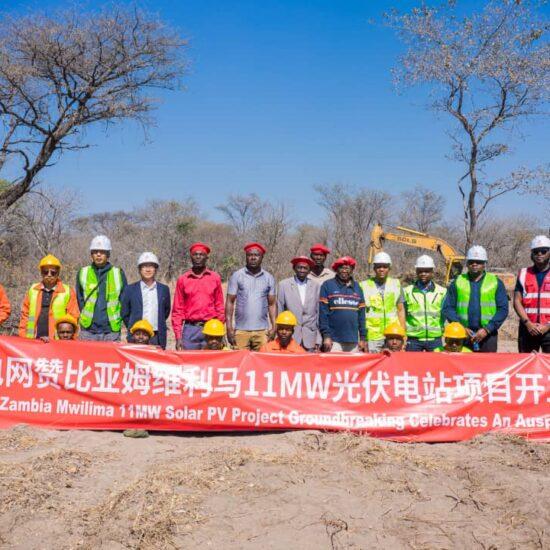
Now, Kanona Power has done the opposite of that in Kazungula’s Mukuni area – investing in the community’s health while its own asset is still little more than a set of drawings, demonstrating that giving value to host communities does not depend on the plant being built at all.
Starting with the killer: identifying the host communities urgent needs Non-communicable diseases now account for 29 per cent of all deaths in Zambia, according to World Health Organisation country data, with diabetes, cancers, chronic respiratory and cardiovascular disease driving a sharp rise in illness and death. The 2017 Zambia STEPS Survey, the first nationally representative look at NCD risk factors, put 18.9 per cent of adults as hypertensive and 6.2 per cent as diabetic, with 24.4 per cent overweight or obese and 90.4 per cent eating insufficient fruit and vegetables. Subnational work suggests the rural reality is worse: hypertension has been measured at 25.8 per cent in Kaoma and 30.3 per cent in Kasama, both districts where diagnostic services are thinnest.
Kazungula sits squarely in that gap. It is the largest district in Southern Province at 16,835 square kilometres, home to roughly 161,645 people at a density of 6.2 persons per square kilometre. Distance compounds its health problem. At Sikuanzwe Rural Health Centre, two nurses and one Environmental Health Technician serve 7,714 people across nine communities, with outreach posts up to 15 kilometres away and no vehicle to reach them. Mukuni Rural Health Centre serves a catchment of over 10,000, some of whom travel as far as 30 kilometres for basic services.
Mukuni Village itself, the seat of the Mukuni Chiefdom, holds more than 8,000 residents on a dry, sandy knoll. The soil defeats most farming, so the village has built its livelihood on tourism — curios, cultural tours, guiding, the trade that spills over from the Falls up the road.
Those two facts together explain what a routine check-up at a health facility really costs someone whose income and livelihood depends on selling baskets to tourists at the village gate, for example, and why chronic disease in rural Zambia is usually caught in a crisis. Distance to health facilities usually means a day spent walking to and fro, standing and waiting in a queue for many hours, and losing income in the process. So, the headaches get treated as headaches. The dizziness gets blamed on the sun.
Bringing the clinic to the yard
In April this year, Kanona Power launched a community-based research programme in Mukuni Village in partnership with the Village Vitality Foundation (VVF), a local non-governmental organisation, and the Ministry of Health, aimed at improving prevention, early detection and management of NCDs — particularly hypertension and diabetes — in selected communities across Zambia. Mukuni was chosen as the pilot.
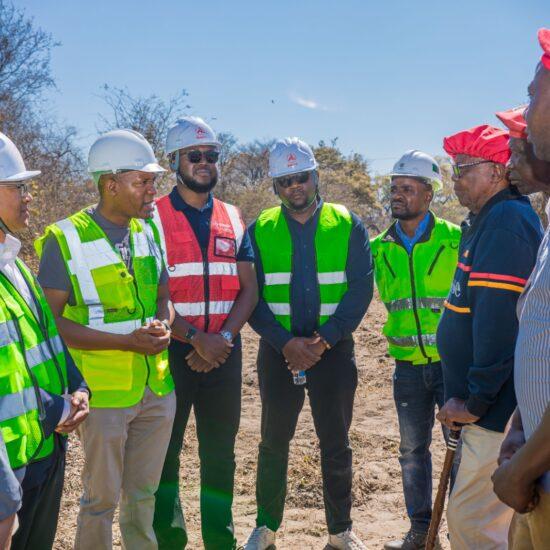
The design deliberately attacks the distance problem rather than working around it. Local Community Health Workers (CHWs) are trained and certified, equipped to screen and counsel their own neighbours at home, and what they record builds a living picture of rural chronic disease that the district has never had. Nobody has to lose a day of trading to find out their blood pressure. Seeing the workers move through the village, reaching the most affected residents and screening them in their own yards, is the whole intervention in miniature: the facility has come to the household, so the household no longer has to leave.
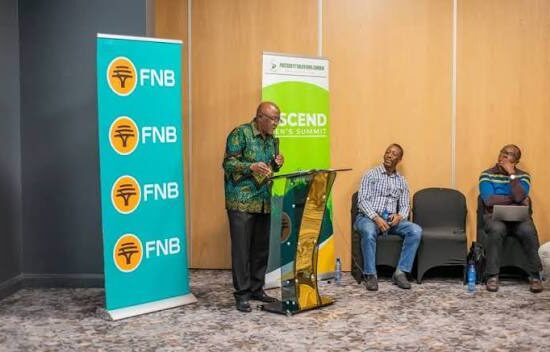
Speaking at the launch, VVF Co-Founder and Technical Lead Dr Kabungo Katongo framed the gap the programme is trying to close: “We’re starting from here. We are trying to get the prevalence. We are trying to get why there’s a rise because that is definitely there. But, of course, we need the numbers. We need to know what has changed from way back before because the cases were way less than we have now. So, what are the factors now that have come in that’s pushing the rise of this condition in these communities?”
The numbers, three months later
Of 455 adults screened in Mukuni and its surrounding catchment areas, 179 (39.3 per cent) were hypertensive. That is roughly two in every five adults, and more than double the national STEPS figure. Under clinical classification, 272 participants (59.8 per cent) had normal blood pressure, 163 (35.8 per cent) had hypertension, four (0.9 per cent) were hypotensive, and 16 (3.5 per cent) recorded readings in the hypertensive crisis range at or above 180/120 mmHg, requiring prompt clinical assessment.
Sixteen people were going about their business in Mukuni Ward at immediate risk of stroke, and none of them knew. They were found because somebody with a cuff walked into their yard.
Overall diabetes prevalence was much better at 2.9 per cent (13 of 455 participants), but 54 participants (11.9 per cent) showed abnormal glucose metabolism. The community approach means the CHW know who these people are and can help them get better health outcomes because their cases are still reversible with diet, movement and follow-up.
Taken together, the preliminary findings show a substantial NCD burden among adults in Mukuni Village, and they make a concrete case for integrated community-based screening, referral and management of hypertension and diabetes in rural Zambia, backed by health promotion around lifestyle change, routine screening, early diagnosis and better linkage to care.
“From the time this programme was launched in April, the community welcomed it. I have got about three hypertensive people in the programme who never knew they were hypertensive because people initially thought that going to a health facility just to have their BP checked was a waste of time. But through this programme, and with the right treatment, many people have been helped. They didn’t know they were either hypertensive or diabetic. These non-communicable diseases really are silent killers,” said Margaret Mulawo, a Community Health Worker, in a recent interview in Mukuni Village.
Christine Mumpotola, a local resident in Mukuni Village is one of the beneficiaries, who have benefited from having her vitals checked right at her home.
“This project has helped me a lot. I never knew I was hypertensive, but through the sensitization programme by the 10 community workers who have been checking for hypertension, I was checked. That is when I discovered I have been hypertensive and it used to be very high,” she said. “I was advised to go to the clinic and was put on treatment, to which I am responding well. I haven’t had any complications and my body has been strong without any sickness. I am able to work without any difficulties.”
Why this is not philanthropy
Rather than filing this under goodwill, it should be better understood as the first instalment of Kanona’s planned project development dividend, paid early.
A certified skill cannot be repossessed. Community Health Workers trained and certified this year remain trained whatever happens to the planned plant’s financing, its tariff negotiations or its timeline. Almost nothing else a developer promises a community has that property. A trained neighbour with a blood pressure cuff is not contingent on commissioning of a power plant.
A construction site brings several hundred workers, income, cash, vehicles, traffic and other economies into the area — all of which move a community’s health profile, some of it for the better and some emphatically not. Without a pre-construction picture, nobody can later say what the project changed. Kanona now has that baseline picture, gathered before its own footprint exists, which is exactly what good environmental and social practice asks for.
Kanona has demonstrated that Corporate Social Responsibility should not be reduced to a cheque and a photograph at handover. Sequencing the community benefit ahead of infrastructure build earns and strengthens its social license, but even more importantly, it has set Mukuni as a test of the deliberate version where the community gets something before the developer does. Three months in, the score is 455 people screened, 179 diagnosed, 16 sent for urgent care, and before a single block in the ground.
Sponsored Article