By Francine Chibuye
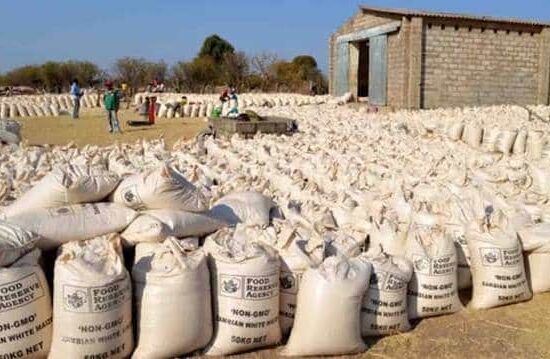
The National Association for Smallholder Farmers (NASFA) has urged farmers to run agriculture as a business and avoid dependence on the Farmer Input Support Programme (FISP), as it backed the Food Reserve Agency’s (FRA) caution against selling maize at “giveaway” prices.
FRA recently warned that selling entire harvests immediately after production threatens household and national food security.
In a statement, the Agency said it had “noted with concern media reports indicating that some farmers from various parts of the country have already started selling their maize at giveaway prices.”
In exclusive interview with Zambian Business Times NASFA Executive Director Frank Kayula said President Hakainde Hichilema’s recent caution to farmers remains critical as harvesting intensifies countrywide.
““He advised farmers not to be in a hurry or rushed to sell their maize early, because better prices are coming.
Kayula said NASFA issued the same advice last season after direct engagements with government and the Food Reserve Agency (FRA), and farmers who ignored it lost out.
“We told farmers, ‘Don’t sell in a rush. Better prices are coming.’ They regretted because FRA gave the best price ever,” he said. “So we can only urge our farmers that they should be patient.”
Kayula stressed that agriculture must be run as a business, not as a cycle of dependency on the Farmer Input Support Programme (FISP).
“In agriculture you must make a profit so that you don’t always rush to government always requesting for FISP’,” Kayula said. “Some people have become too dependent on FISP and they are not growing.”
He called for a review of beneficiaries, arguing that farmers who habitually sell at “giveaway” prices, expecting FISP to cover them, undermine the programme.
they should be fished out and removed from FISP. They are not there for business and they will drain government resources forever and ever. We want other farmers to benefit from FISP, not the way it has been.”
“So those who are selling, they should not think that they will come and lean on government again. We’ll begin identifying them and once we identify them” He said
While acknowledging the cash pressure farmers face, Kayula said diversification is key to avoiding distress sales.
Kayula said there is a challenge of needing money immediately, but government and ourselves and other stakeholders have been calling on farmers to diversify so that they are able to have money and hold on to their crop and sell when there are better prices. “We don’t want perpetual poverty in the farming sector at all.” he said
Kayula outlined three key steps for farmers Diversify to avoid cash pressure, Be patient and wait for better prices, and Use the new Warehouse Receipt System to store grain in certified facilities and access credit, then sell when prices improve.
The Warehouse Receipt System allows farmers to deposit grain in certified facilities and access credit using the receipt as collateral, instead of selling when the market is flooded and prices are low.