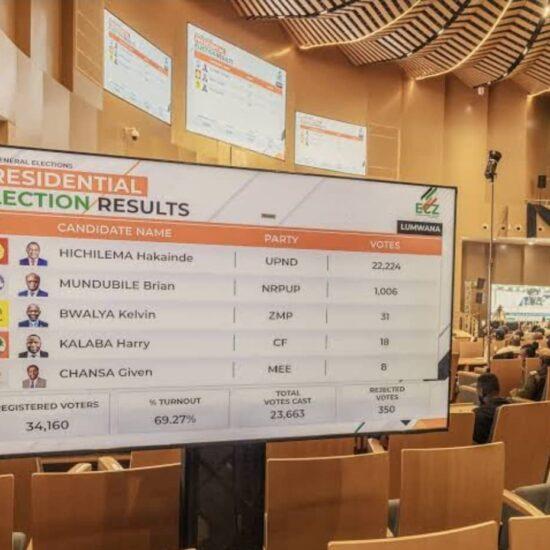
According to the Electoral Commission of Zambia (ECZ) voter registration statistics, Zambia’s certified voters increased from 7.02 million in 2021 to 8.79 million in 2026, representing an addition of about 1.7 million voters.
ECZ data seen by the Zambian Business Times (ZBT) further shows that in 2021, young people aged 18 to 34 accounted for about 54% of all registered voters, with the 24 to 34 age group alone contributing 29.6%, making it the single largest voting bloc.
However, the 2026 certified register tells a different story, with voters aged 18 to 34 now standing at 4,066,423 people or 46.3%, while those aged 35 years and above have become the majority at 53.7% of the register.
The figures raise a critical question, if young people remain the majority of Zambia’s population, why have they become the minority on the voters’ register in 2026?
Speaking in an interview with Zambian Business Times – ZBT, Advocates for Democratic Governance Foundation (ADEG) Executive Director, Gideon Musonda described the trend as worrying, saying the voter register should ordinarily reflect the country’s youthful population.
“We have youths as the majority in terms of population and when there is a national activity like voter registration we expect those numbers to be reflected on the register, so we need to investigate further to understand why the trend has changed from 2016 and 2021,” said Musonda.
He attributed part of the decline to the current political environment, saying the messages being presented to young people may no longer be motivating them to participate in elections.
“What motivates the youths to turn out is the messaging that political parties offer them because if the messages are inspiring they become more interested in participating in elections to make the change they want,” he said.
Meanwhile, Musonda said repeated failure by successive governments to fulfil campaign promises has also contributed to growing frustration among young people, reducing their enthusiasm to register and vote.
“When young people do not see the change after electing leaders it demotivates them and that could have been one of the reasons why the numbers have not reflected the national population,” he said.
Musonda further urged political parties to move away from slogans and offer practical solutions that respond to the realities facing young people across the country.
“The political players need to deliver messages that inspire the youths, demonstrate practical implementation and not just empty promises because that is what will restore confidence and encourage greater participation,” he said.
Article by Phillip Sinkala