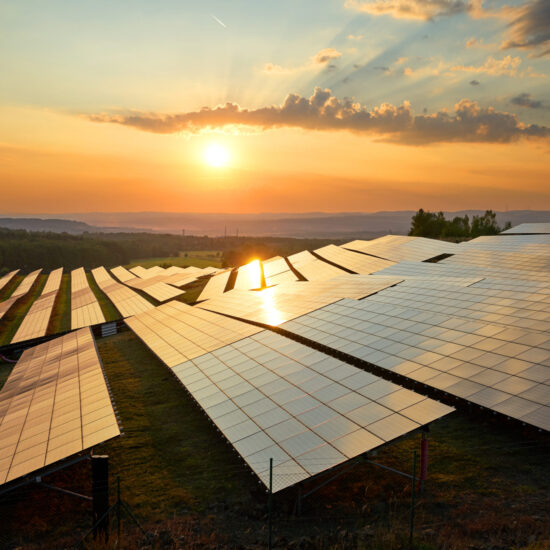
ZESCO, Zambia’s state owned power utility, has found itself at the center of controversy after plans to contract about $70 million in debt financing for its 100 megawatt (MW) Chisamba Solar Project have led to questions on the utility financial direction regarding additional debt contraction.
ZESCO through its subsidiary Kariba North Bank Extension is reported to have contracted about $70 million in debt from a private Bank to finance the 100-megawatt Chisamba solar power project, the Zambian Business Times (ZBT) has exclusively learned.
This project was part of a larger initiative between ZESCO and Power China to deliver 600MW of solar power across three sites, initially planned with EPC financing.
However, the financing structure for this particular project, which was earmarked to be a 200MW has since evolved, with sources indicating that challenges in securing financing led to the current debt arrangement with Stanbic Bank.
Sources with knowledge about ZESCO operations, who wished to remain anonymous due to the sensitivity of the matter, revealed that the financing structure for the project comprises 70% debt and 30% equity.
“The equity component is being contributed by Kariba North Bank Power Company, a subsidiary of ZESCO.”
“Under the EPC contract, Power China was responsible for the engineering, procurement, transportation, and construction of the solar plant. As the investment, totaling around $101 million, and with EPC costs nearing $100 million, the payment structure between Kariba North Bank Power Company, a subsidiary of ZESCO, and Power China dictates that the construction costs at this stage are the responsibility of the EPC contractor.”
ZBT has also independently confirmed that ZESCO has entered into a 13-year Power Purchase Agreement (PPA) with Africa GreenCo. Notably, insider sources have disclosed that the generated power from the Chisamba plant is primarily earmarked for the mining operations of First Quantum Minerals (FQM).
This revelation has raised concerns regarding the project’s immediate impact on the persistent national electricity crisis and load shedding affecting small local businesses and residential consumers.
While the Chisamba solar project was initially anticipated as a significant step towards alleviating the power deficit for the country, the allocation of its output to the mining firms who already have alternatives to import power on their own suggests it may not directly ease the challenges faced by other sectors grappling with power outages.
Sources familiar with the project suggest that this arrangement will enable FQM to reduce its reliance on imported power. Consequently, the 100MW generated from the Chisamba plant is unlikely to have a substantial impact on the current load shedding experienced by other users.
The Chisamba Solar project represents a total investment of approximately $101 million, with the EPC contract valued at nearly $100 million, equating to roughly $1 million per megawatt.
The Chisamba Solar Project, touted as a paradigm shift towards renewable energy in Zambia, now faces skepticism regarding its true benefits.
Critics are questioning the wisdom of incurring significant additional debt while the most affected local and Zambian based businesses grapple with frequent power outages.
Analysts argue that the focus should have been on addressing the pervasive load shedding rather than catering to the power demands of major corporations, who even have the muscle to import power on their own.